
If you manage a team in Malaysia — whether in a factory, an office, a retail environment, or a healthcare setting — there is a good chance ergonomic risk assessment (ERA) is already a legal requirement for your workplace.
Yet many companies in Kuala Lumpur and Selangor are still unaware of this obligation, or are unsure where to start. This article explains what ERA is, what the law says, and what the assessment process actually looks like.
What Is Ergonomic Risk Assessment?
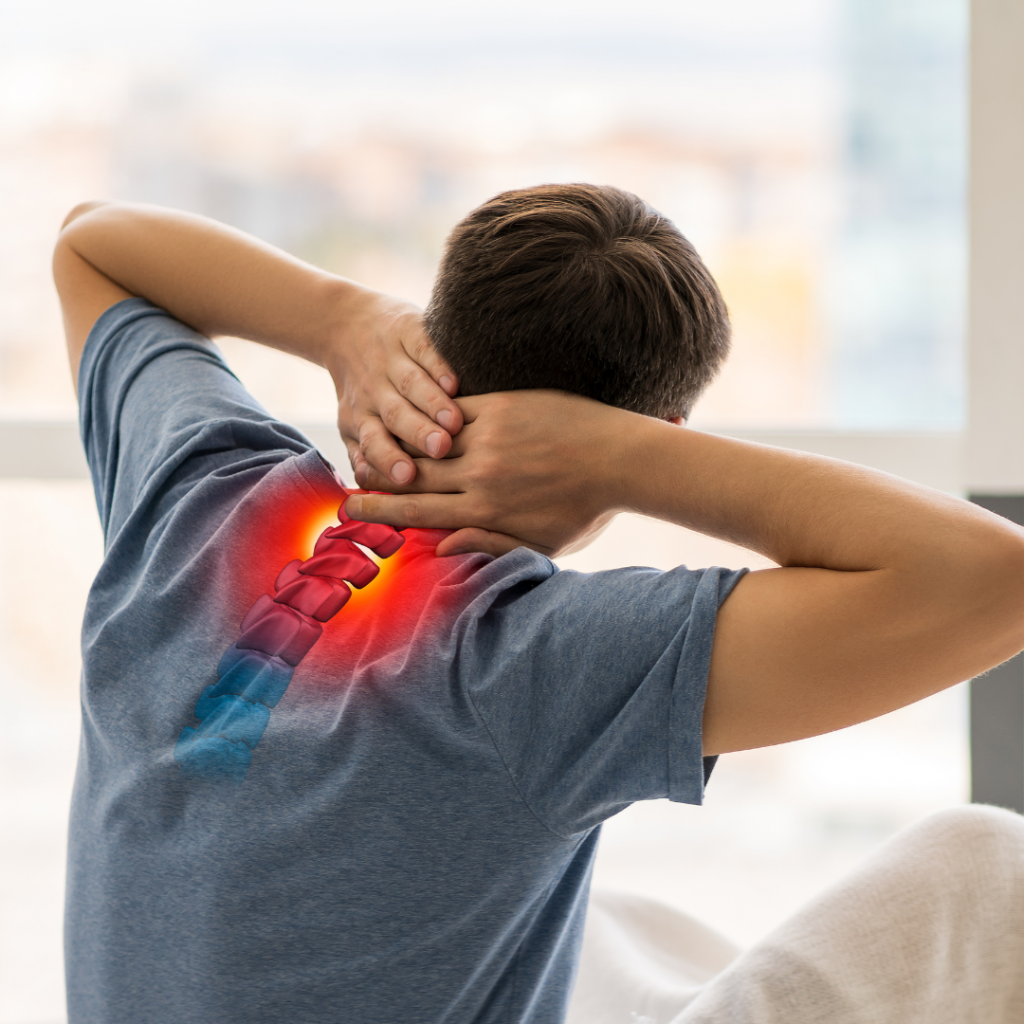
Ergonomics is the science of designing work to fit the worker — not the other way around. When work tasks, tools, or environments place excessive physical demand on the body, they create ergonomic risk factors that can lead to musculoskeletal disorders (MSDs): conditions affecting muscles, tendons, nerves, and joints.
MSDs are among the most common work-related health problems globally. In Malaysia, conditions such as lower back pain, carpal tunnel syndrome, neck and shoulder disorders, and knee problems are frequently reported across manufacturing, office, healthcare, and logistics sectors.
An Ergonomic Risk Assessment (ERA) is a structured process of identifying, evaluating, and controlling these ergonomic risk factors in the workplace. It is conducted by a trained, DOSH-recognised Ergonomics Trained Person (ETP).
What Does Malaysian Law Say About ERA?
The legal basis for ERA in Malaysia comes from the Occupational Safety and Health Act 1994 (OSHA 1994), specifically Sections 15 and 24, which require employers to ensure a safe and healthy work environment — including managing health risks from repetitive tasks, awkward postures, heavy lifting, and poor workstation design.
The OSH (Amendment) Act 2022 has strengthened enforcement. Penalties for non-compliance have increased significantly, with fines now reaching up to RM500,000 for serious violations.
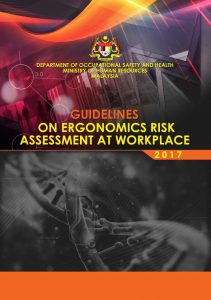
Additionally, DOSH’s Guidelines on Ergonomics Risk Assessment at Workplaces (2017) provides a formal framework that defines two levels of assessment:
- Initial ERA — a screening level assessment to identify whether ergonomic risk factors are present and their severity
- Advanced ERA — a detailed, method-specific assessment conducted when Initial ERA identifies significant risk factors
Which Industries Are Most at Risk?
While ERA is relevant to all workplaces, certain sectors carry the highest exposure to ergonomic risk factors:
Manufacturing and production: Assembly line workers, machine operators, and quality control staff are frequently exposed to repetitive motions, forceful exertions, and sustained awkward postures.
Logistics and warehousing: Manual handling — loading, unloading, picking and packing — involves repeated bending, twisting, and heavy lifting.
Office and corporate environments: Prolonged sitting, poor workstation setup, and intensive keyboard and mouse use contribute to neck, shoulder, and lower back disorders. Remote and hybrid workers are increasingly at risk.
Healthcare: Nurses, physiotherapists, and care assistants regularly perform patient handling tasks that expose them to high spinal and shoulder loading.
Retail: Cashiers, stock handlers, and display staff experience a combination of prolonged standing, repetitive reaching, and manual handling.
What Happens During an ERA?
An ERA conducted by a DOSH-registered Ergonomics Trained Person follows a structured process:
Step 1: Pre-assessment documentation review The assessor reviews existing incident reports, medical records related to musculoskeletal complaints, job descriptions, and any previous assessment reports.
Step 2: Workplace walkthrough and task identification All work tasks are identified and categorised. Tasks involving repetitive motion, manual handling, sustained postures, or use of vibrating tools are prioritised for assessment.
Step 3: Worker consultation and symptom survey Standardised questionnaires — such as the Cornell Musculoskeletal Questionnaire (CMQ) or Nordic Musculoskeletal Questionnaire — are administered to identify which body regions workers are experiencing discomfort or pain.
Step 4: Ergonomic risk factor assessment Using validated tools specified in the DOSH guidelines, the assessor evaluates the presence and level of ergonomic risk factors including:
- Awkward posture (e.g., bending, twisting, overhead reaching)
- Repetitive motion of the upper limbs
- Forceful exertions (gripping, pushing, pulling, lifting)
- Contact stress and vibration exposure
Step 5: Risk level determination and recommendations Each task is assigned a risk level. For tasks identified as moderate to high risk, specific engineering controls, administrative controls, and personal protective measures are recommended.
Step 6: Report and action plan A formal ERA report is produced, documenting findings, risk levels, and a prioritised action plan for risk reduction.
What Is the Difference Between ERA and CHRA or NRA?
Companies sometimes confuse ERA with other DOSH-mandated assessments:
- CHRA (Chemical Health Risk Assessment) — required when workers are exposed to chemicals hazardous to health
- NRA (Noise Risk Assessment) — required when workers are exposed to noise levels that may cause hearing damage
- ERA (Ergonomic Risk Assessment) — required when workers are exposed to ergonomic risk factors such as repetitive tasks, manual handling, and awkward postures
These are distinct assessments with different scopes, conducted by different competent persons. Some workplaces require all three.
Why Choose a Physiotherapy Clinic to Conduct Your ERA?
Most ERA providers come from a safety and health background. Trapy Physio brings an additional clinical dimension: our team includes DOSH-registered Ergonomics Trained Persons with a physiotherapy foundation.
This means we do not just identify risks — we understand the clinical outcomes of those risks. We can connect ergonomic findings directly to the musculoskeletal complaints your workers are already experiencing, and provide integrated recommendations that bridge assessment and treatment.
For companies looking for a comprehensive approach to workplace health — from regulatory compliance to worker rehabilitation — this combination is uniquely valuable.
How to Get Started
If your company is in Kuala Lumpur or Selangor and you are unsure whether you require an ERA, or you need to complete one for DOSH compliance, contact us for a no-obligation consultation.
Trapy Physio Skyawani 2, G-05, Jalan 2/12, Kampung Batu Muda, 51100 Kuala Lumpur 📞 011-2898 2889 🌐 trapyhq.com
We conduct ERA assessments across KL, Selangor, and surrounding areas for companies of all sizes — from SMEs to multinational corporations.
This article is for informational purposes. For specific legal advice on OSHA compliance, consult a qualified occupational safety and health professional or legal advisor.